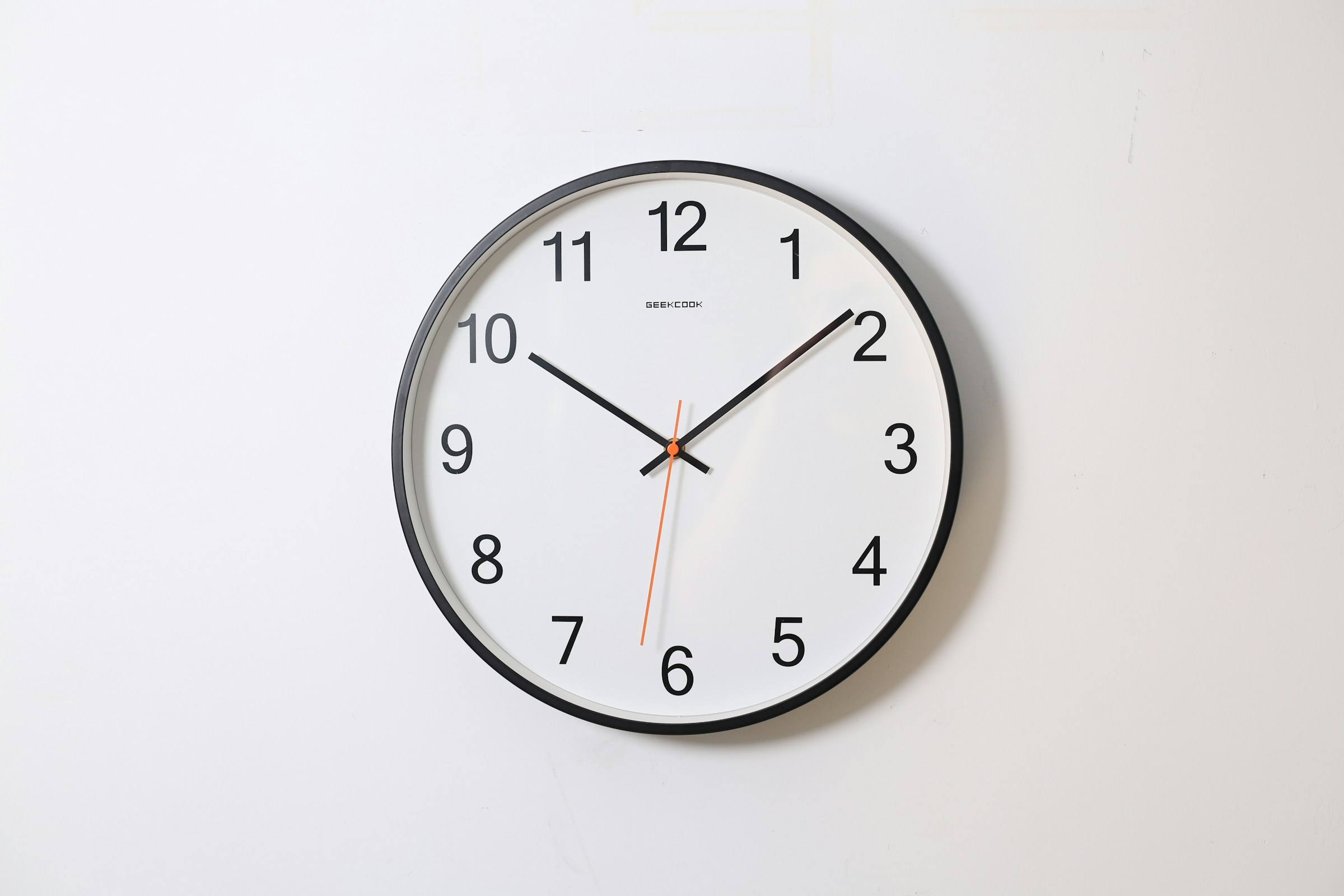
Time in the leadership role
Do you actually not have the time, or does it just feel that way?
My colleague and I hear this often. In leadership teams, in one-on-one conversations, in development programs, and in passing after long meetings: "I don't have time." It is said by skilled, dedicated leaders. Often with gravity, often with a sense of guilt, and almost always with the feeling of falling behind. Over time, we became curious. Is this really about a lack of hours in the day, or is something else going on?
First, we must be clear about one thing: many leaders actually have more to do than before. The pace has increased. Complexity has increased. More decisions must be made faster, often with less information and greater consequences. In what is often referred to as a VUCA world, many changes happen simultaneously. Digitalization, continuous restructuring, geopolitical unrest, skills shortages, and increased expectations place real pressure on the leadership role. The experience of time pressure is therefore not imagined. At the same time, this is precisely where our curiosity began. Because even in organizations where the calendar was objectively no fuller than before, we heard the same sentence again and again: "I don't have time." It made us ask whether pace alone explains the feeling of time scarcity, or if there are other mechanisms at play. To understand a little more about this, we need to take a small detour.
When time disappears without the clock stopping
In the 1960s and 70s, the French researcher Michel Siffre conducted extreme experiments where he isolated himself deep inside caves, without daylight, clocks, or social cues. The purpose was to study the human internal clock and circadian rhythm. The most interesting finding was not drama, but disorientation. Siffre himself experienced that he functioned rationally and coherently. Nevertheless, his perception of time gradually drifted off course. At one point, he thought about a month had passed, while in reality, significantly longer had gone by. The point is not the cave. The point is the absence of corrective signals. When we lose external references that can adjust us – breaks, circadian rhythms, social mirrors, honest feedback – the brain begins to create its own explanations. The experience from within can feel logical and consistent, while objectively being miscalibrated.
"I don't have time" as a leadership state
In leadership roles, a milder but more long-term version of this often occurs.
- You sit alone with responsibility, assessments, and consequences
- The pace is high, and the changes are many
- Breaks, reflection, and recovery are gradually pushed aside
- Honest mirrors and dissenting voices become fewer the higher up you go
Over time, something insidious happens. The perception of time changes. Everything feels urgent. Long-term thinking is perceived as a luxury. The sentence "I don't have time" becomes not just a description of the calendar, but an internal state. When sleep and circadian rhythms are out of balance, we know that the brain both overestimates the urgent and underestimates the long-term. This increases reactivity and weakens the quality of assessments – often without the leader being aware of it themselves. In such a state, it is easy to think that the solution is to work a little faster or hold out a little longer. Research points in a different direction.
More explanations than speed alone
Pace matters. But pace does not explain everything. The feeling of not having time is also reinforced by:
- a lack of corrective feedback
- continuous cognitive load without clear stopping points
- physiological factors such as sleep deprivation and circadian rhythm disturbances
When several of these factors act simultaneously, we get a subjective experience of time scarcity that can be far stronger than the objective situation suggests. This is where many leaders get stuck: the calendar can be adjusted a little, but the feeling does not let go.
What can leaders do differently?
"Getting more time" is rarely realistic. Calibrating the perception of time is often far more effective.
1. Build external feedback loops
Don't wait for someone to speak up. Create intentional arenas for:
- honest sparring
- reviewing data and feedback
- dissenting voices that actually challenge your assumptions
The more responsibility you carry alone, the more important it is to secure real corrective input
2. Protect decision-making time
Avoid making your most important decisions when you:
- are sleep-deprived
- have been in meetings all day
- feel significant time pressure
A simple rule of thumb is to avoid strategic decisions late in the evening on days when you are clearly tired.
3. Normalize reflection as work
Reflection is not a break from work. It is part of the leadership role. Often, short pauses are enough to restore perspective and reduce reactivity.
4. Share the burden earlier
Isolation narrows both your perspective and your sense of time. Share issues before they become acute, not after.
Reflection questions for leaders
- When I say "I don't have time," what am I actually lacking in that moment?
- Who or what is correcting my perception of reality today?
- Which decisions do I make in a rush most often, and what are the consequences?
- How do sleep, breaks, and pace affect the quality of my leadership?
- What can I adjust this week to achieve better calibration, rather than just adding more hours?
Time as a leadership phenomenon
Leaders don't experience time pressure just because the world is moving faster. They also experience it because the human system has limitations. Michel Siffre didn't lose his footing because he was irresponsible. He lost it because he lacked external cues to correct his internal perception. Leaders who constantly feel they don't have enough time are rarely lazy or incompetent. They are often isolated, overloaded, and miscalibrated. Working on the perception of time is therefore not just self-development. It is good leadership. And good risk management.
References
Hussey, K. D. (2023). Timeless spaces: Field experiments in the physiological study of circadian rhythms.
Volk, S., Lowe, K. B., & Barnes, C. M. (2022). Circadian leadership: A review and integration of chronobiology and leadership. Journal of Organizational Behavior.
Walker, M. (2017). Why We Sleep. Scribner.
Goel, N., Rao, H., Durmer, J. S., & Dinges, D. F. (2009). Neurocognitive consequences of sleep deprivation. Seminars in Neurology.
Johns Hopkins University (2022). Time, in perspective.
ArcQ Group. The hidden impact of leadership loneliness.
Human Edge UK. The unspoken truth about leadership loneliness.
Psychology Today. Articles on leadership loneliness, stress, and decision-making quality.